

The Terminator rising from the ashes of judgment day? We got the timeline wrong. The machines are not coming for us with lasers. They are coming for our to-do lists, our inboxes, and our repetitive work.
And there is a turf war for who controls them.
The Skynet We Actually Asked For
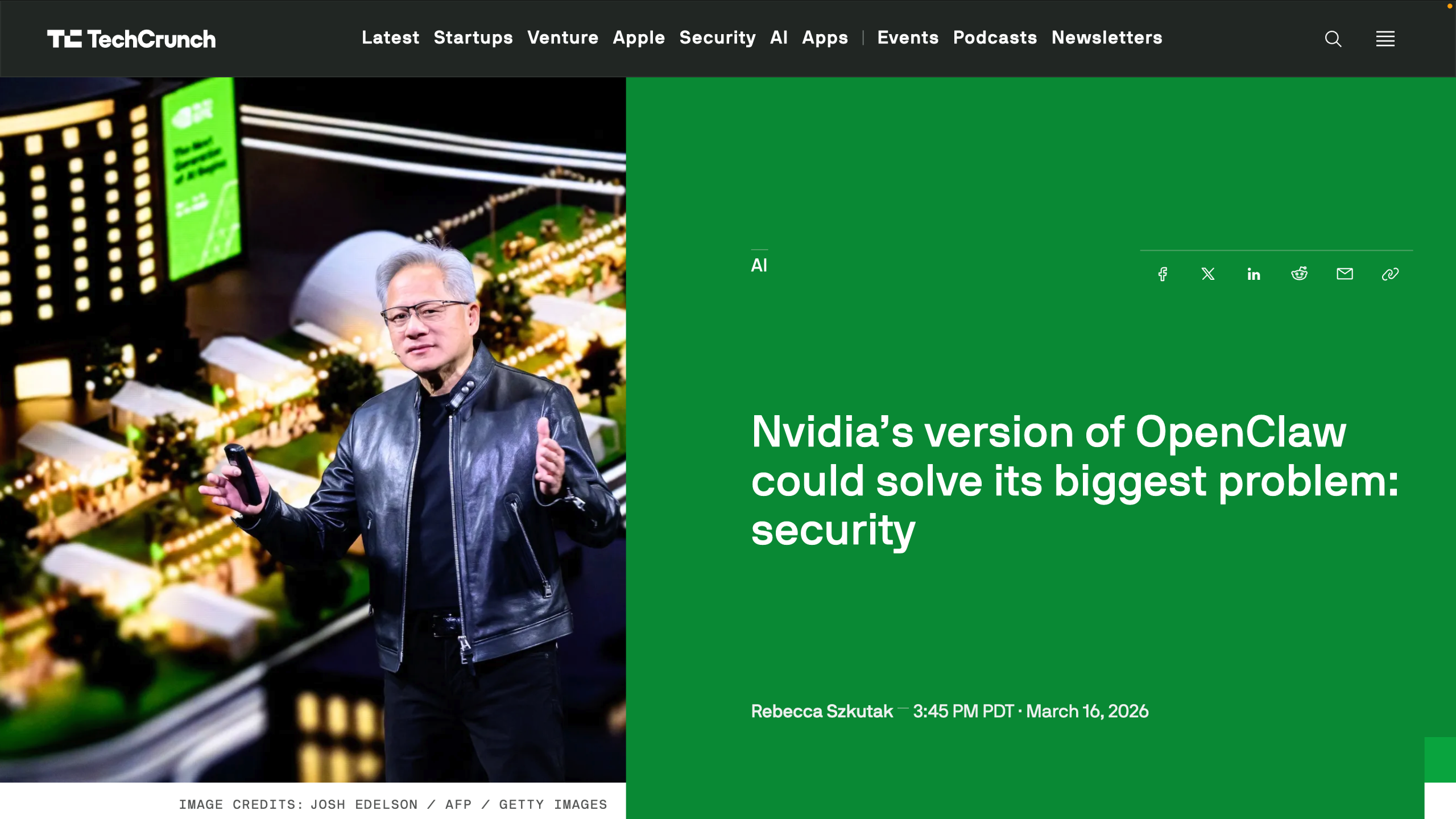
Nvidia’s GTC keynote dropped a bombshell this week. Jensen Huang announced NemoClaw, an enterprise-grade wrapper around OpenClaw that adds security, sandboxing, and corporate governance. But here is what matters: Huang explicitly stated that every company needs an OpenClaw strategy.
The gold rush is on.
Six weeks ago, OpenClaw was a viral GitHub repo with a cool demo. Today it is a phenomenon.
OpenClaw has 250,000+ stars, overtaking React to become the most-starred non-aggregator software project on GitHub. Peter Steinberger joined OpenAI on February 14, 2026. The project spawned an ecosystem so fast it makes your head spin.
But here is the thing about viral open-source projects: they expose problems just as fast as they gain users.
And it is why we are seeing the “Claw” ecosystem explode with alternatives, each attacking a different weakness of the original.
The Sequels
NemoClaw: The Enterprise Wrapper
Nvidia’s play is smart. They did not rewrite OpenClaw. They wrapped it. NemoClaw adds enterprise-grade security and privacy features — sandboxing, least-privilege access controls, audit logging. The OpenShell runtime enforces container isolation.
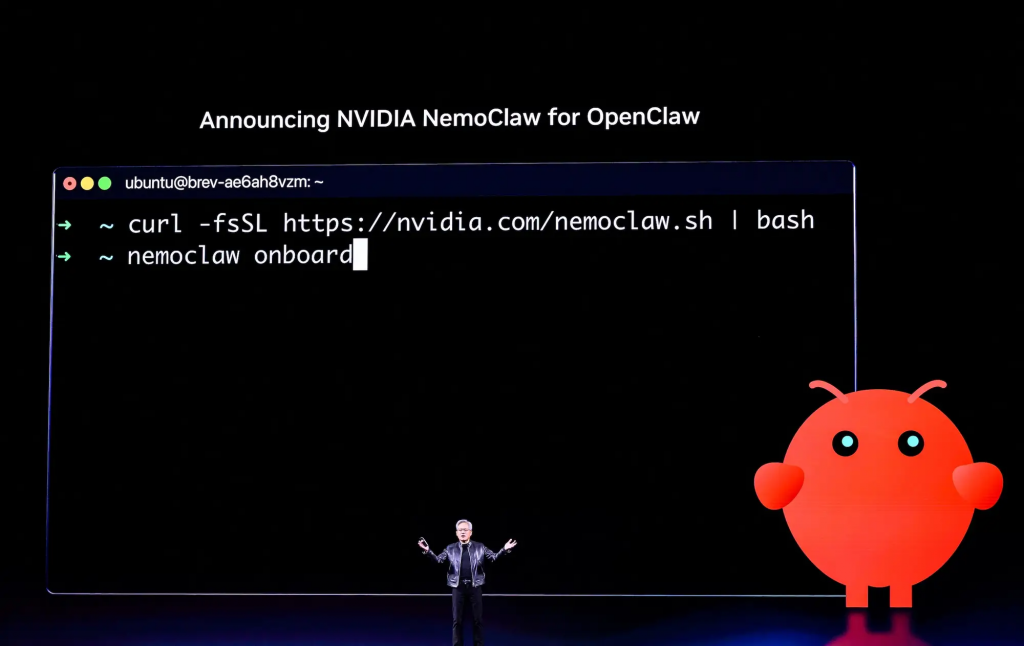
Huang said at GTC: “We all have a Linux strategy. We all needed to have an HTTP HTML strategy, which started the internet. We all needed to have a Kubernetes strategy, which made it possible for mobile cloud to happen. Every company in the world today needs to have an OpenClaw strategy, an agentic systems strategy.”
Perplexity Computer: The Safer Cloud
Perplexity saw the same security problem from a different angle. Their answer is Perplexity Computer, a cloud-based agent system that keeps everything off your local machine.
Perplexity frames it as OpenClaw without the vulnerabilities, with safeguards like tracked activity, sign-off for sensitive tasks, and a kill switch to shut the system down.
The tradeoff is obvious. You lose the local file access that makes OpenClaw powerful. But you gain control, auditability, and someone else to blame if things go wrong.
Manus My Computer: Big Tech Enters the Chat
Meta-owned Manus just made their move. On March 16, 2026, they released My Computer, a desktop app for macOS and Windows that puts an AI agent directly on your local machine.
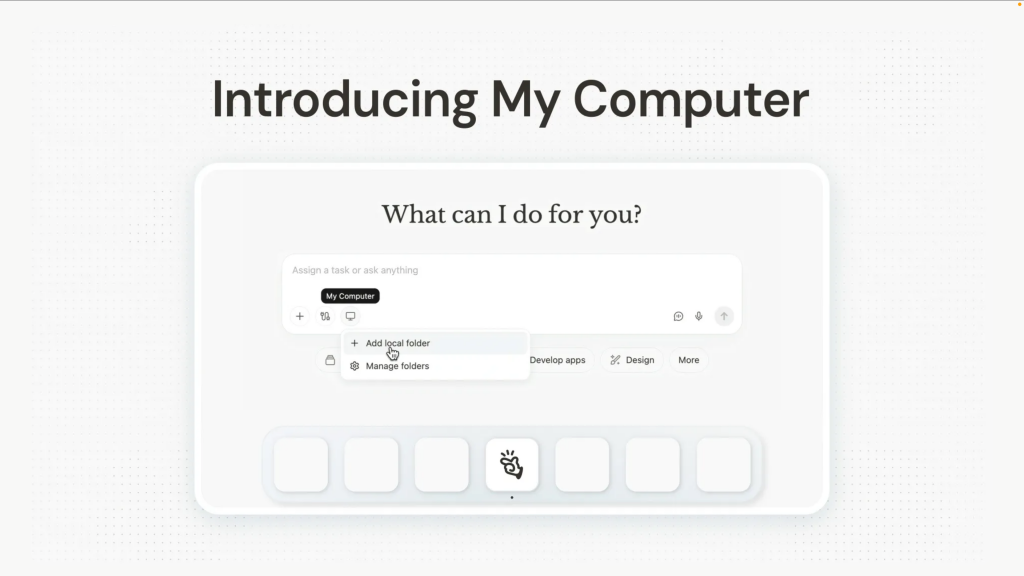
Manus gives agents direct access to your files, terminal, applications, and hardware. Every command requires individual approval, which sounds tedious but might be exactly what cautious users need.
NanoClaw: The Auditability Play
Gavriel Cohen built NanoClaw in a weekend and launched it the day after OpenClaw’s rebrand. His pitch is surgical: OpenClaw’s codebase is too large to audit. NanoClaw delivers equivalent functionality in just hundreds of lines of TypeScript.
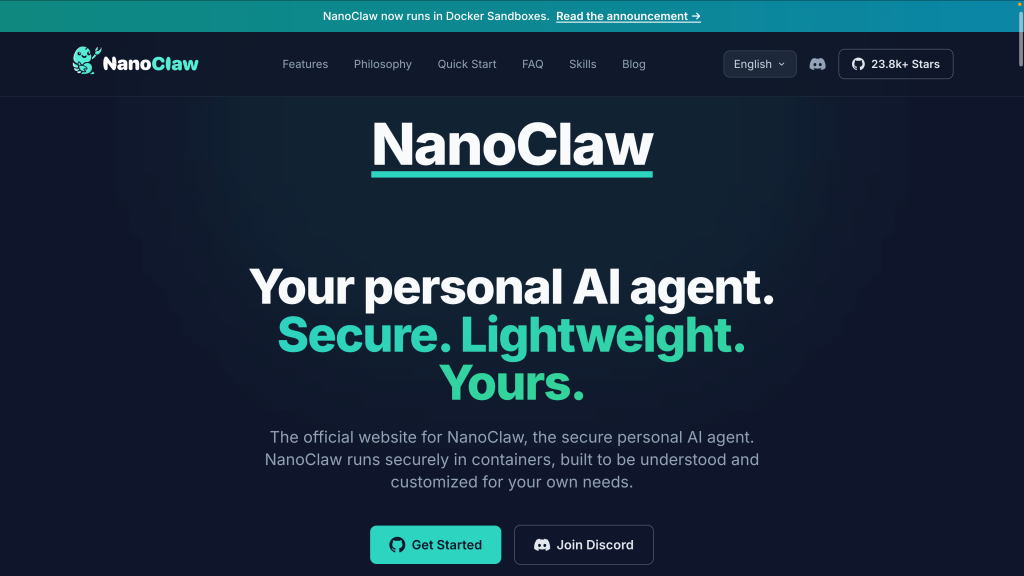
Every agent runs in a mandatory container — Apple Containers on macOS, Docker on Linux. No exceptions. NanoClaw signed with Docker to integrate Docker Sandboxes.
ZeroClaw: The Performance King
Where NanoClaw attacks on security, ZeroClaw attacks on performance. The numbers are stark: a 3.4MB Rust binary, under 10 milliseconds boot time on 0.6GHz cores, less than 5MB of RAM for long-running agents.
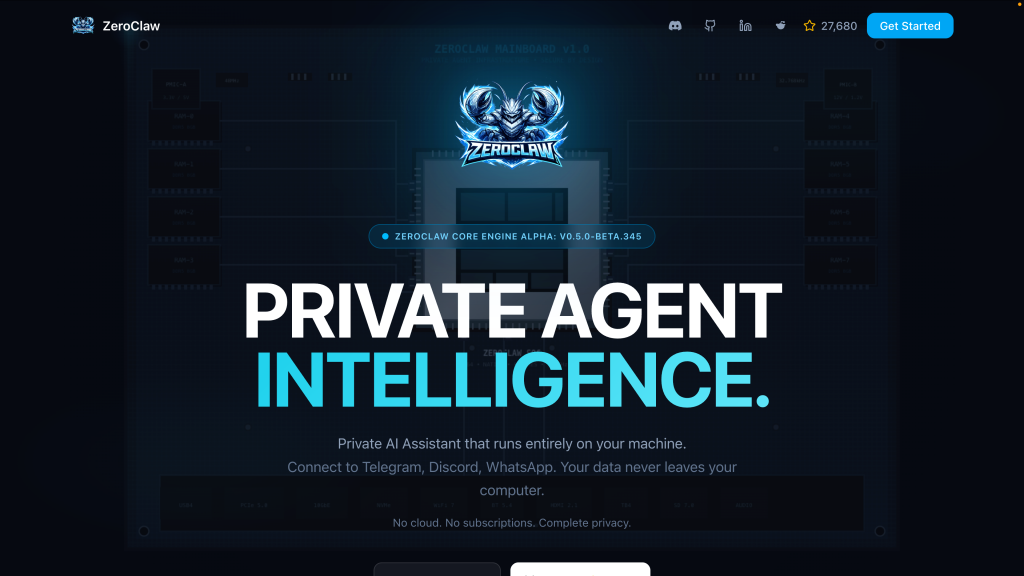
ZeroClaw can run on $10 hardware. A Raspberry Pi Zero. An ESP32 board. Built by students and members of the Harvard, MIT, and Sundai.Club communities.
Moltis: The Enterprise Rust Alternative
Moltis takes a different approach to Rust. Where ZeroClaw optimizes for minimalism, Moltis optimizes for enterprise completeness. Created by Fabien Penso, it bills itself as “a Rust-native claw you can trust.”
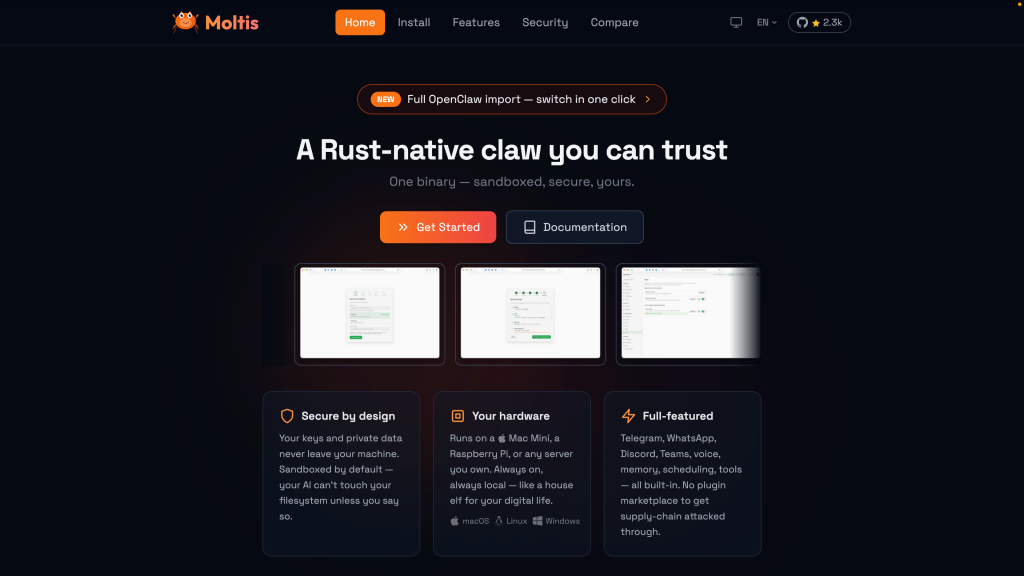
Features include embeddings-powered long-term memory, multi-channel deployment, voice I/O, MCP server support, Prometheus metrics, and OpenTelemetry tracing. At only 2,000 GitHub stars, Moltis has not gone viral. But the engineering rigor suggests a dedicated core team building for production environments.
What This Means for Developers
If you are building with agents today, you have options. That is the good news.
The bad news: the landscape is changing weekly. The project you choose today will probably be superseded by a fork with better security, better performance, or better enterprise features in a few weeks.
- Need maximum features? OpenClaw is still the default.
- Handle sensitive data? NanoClaw is purpose-built for you.
- Deploying to edge? ZeroClaw changes the economics.
- Need enterprise features? Moltis has what you need.
- Want Nvidia’s blessing? NemoClaw is now an option.
The “right” answer depends on what you are building, not what is trending.
The Questions That Matter
As this shakes out, I am watching three questions:
Who solves the trust problem at scale? Security is not a feature you add later. It is an architectural decision. The winner will be whoever makes agents trustworthy by default, not configurable to be trustworthy if you know what you are doing.
Does local or cloud win? Nvidia is betting on local with serious hardware. Perplexity is betting on cloud with serious controls. The answer might be “both, for different use cases,” but the economics will force consolidation eventually.
What happens when this is just… normal? We are in the early adopter phase. When agent frameworks become as boring as web servers, what does that world look like? Every application autonomously handling tasks, coordinating with other agents, operating on behalf of users without constant supervision.
That is the world we are building toward. The clones and competitors are just the growing pains of a category finding its footing.
The rise of the machines is not a future dystopia. It is a toolset. And like every toolset before it, it will make the people who learn to use it superhuman.
The question is: which claw do you pick?